Dryer
High energy efficiency compressed air dryers
Advanced purification equipment for clean and dry air
Badyar offers a complete range of energy-efficient and environmentally friendly compressed air dryers, including:
- Refrigerated Dryers
- Modular Desiccant Dryers
- Heatless Desiccant Dryers
- HOC (Heat of Condensation) Dryers
- Sub-Zero Dryers
All of our technologies are designed for maximum reliability, long life cycles and easy access for servicing. So, whichever technology you choose, you can be sure that your investment will deliver uncompromising performance.
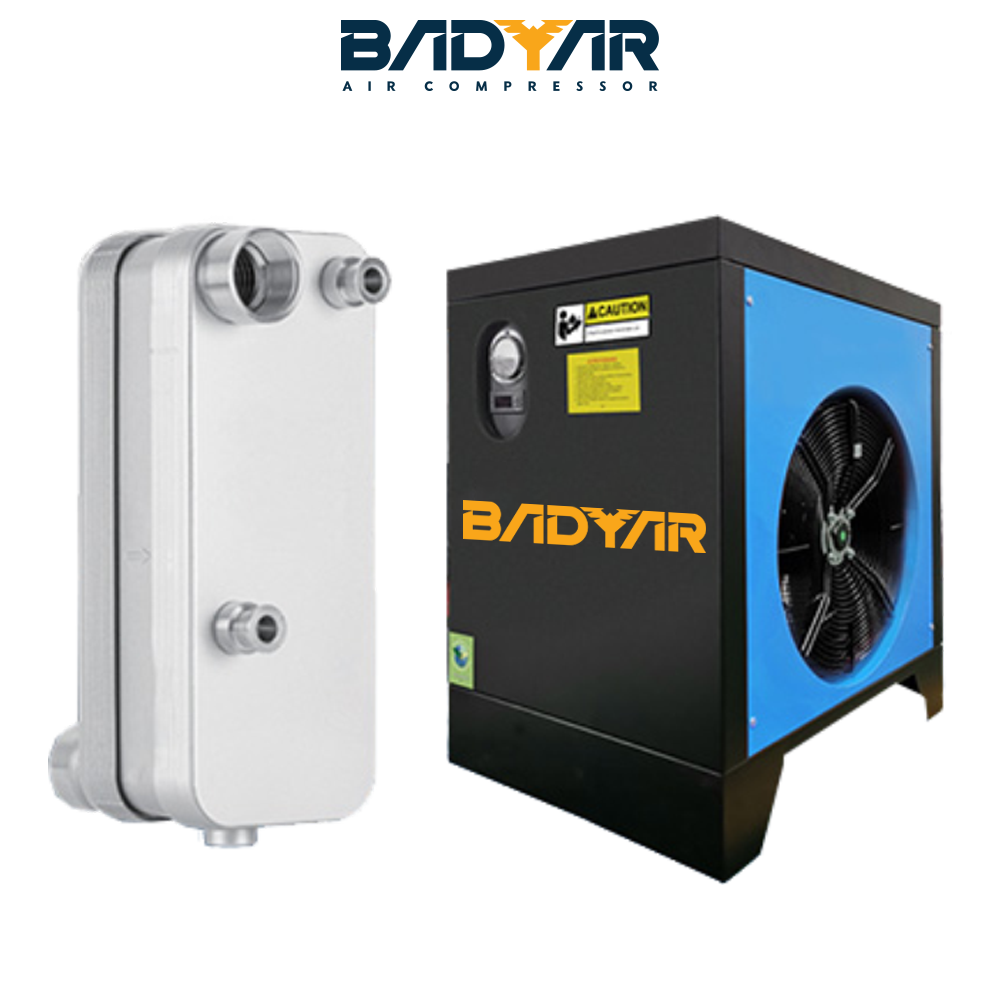
High pressure refrigeration dryer
To remove moisture from the air in the form of particles or vapor, Badyar offers refrigerated compressed air dryers. High-pressure dryers are also available for special applications, including PET bottle production machines and laser cutting machines.
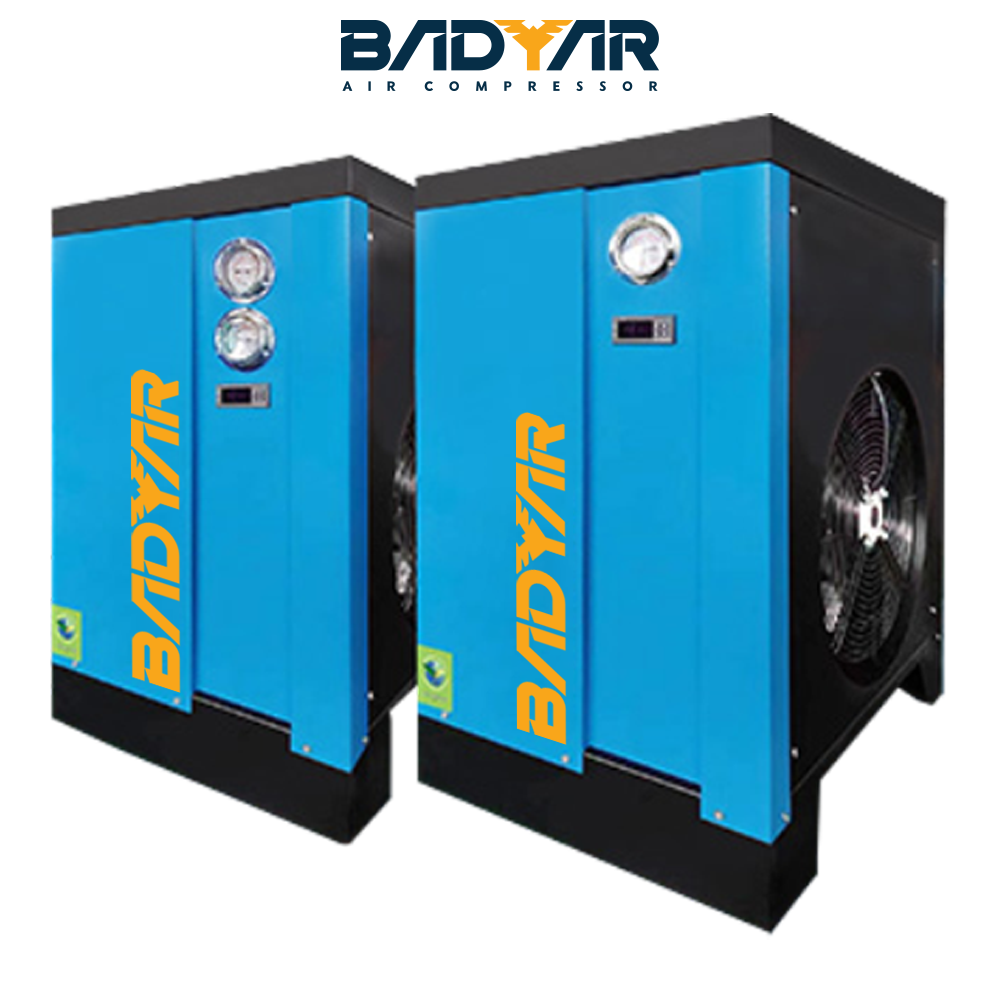
Low pressure refrigeration dryer
Refrigerated dryers are the most widely used type of dryer technology in various industries. The operation of these systems is as follows:
- Heat exchange
- Moisture distillation and separation
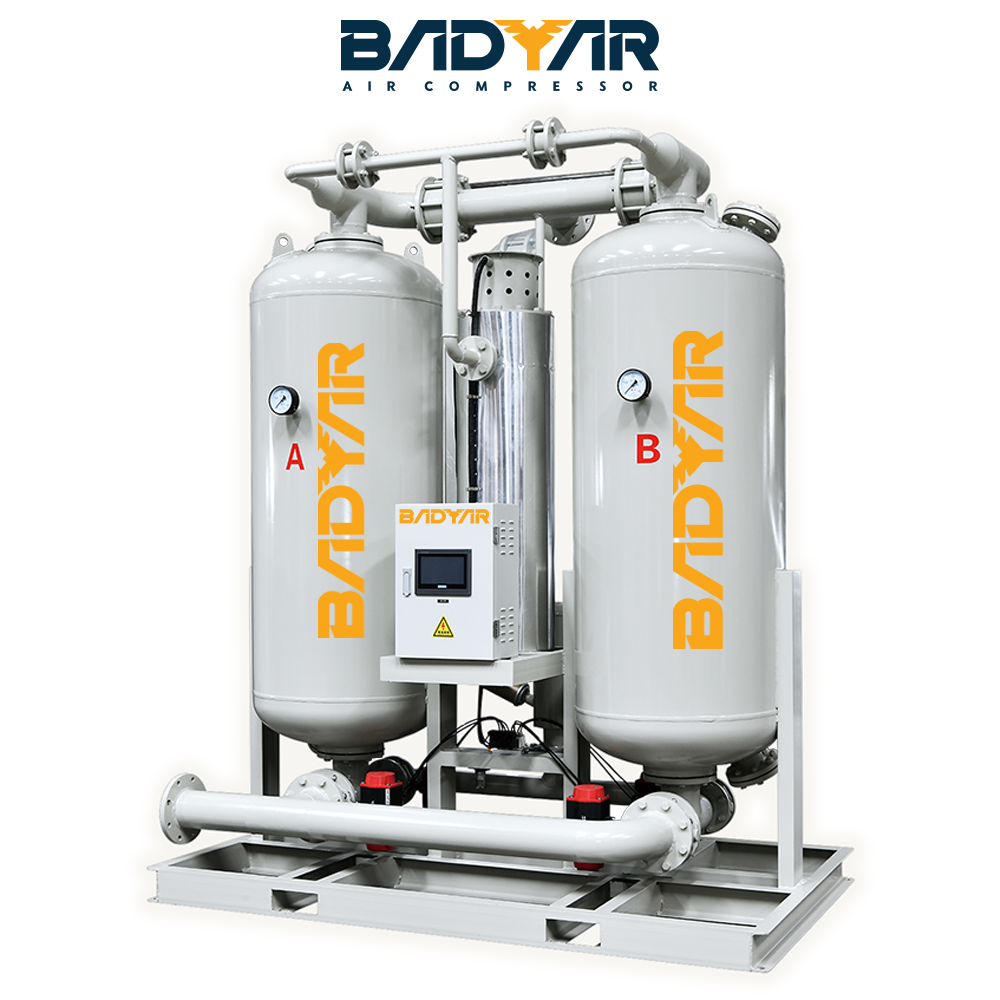
Absorption dryer with element
Desiccant Air Dryers are the industry’s solution for extremely dry air. Desiccant air dryers work on a scientific principle: the natural tendency of moisture to migrate to the driest possible environment.
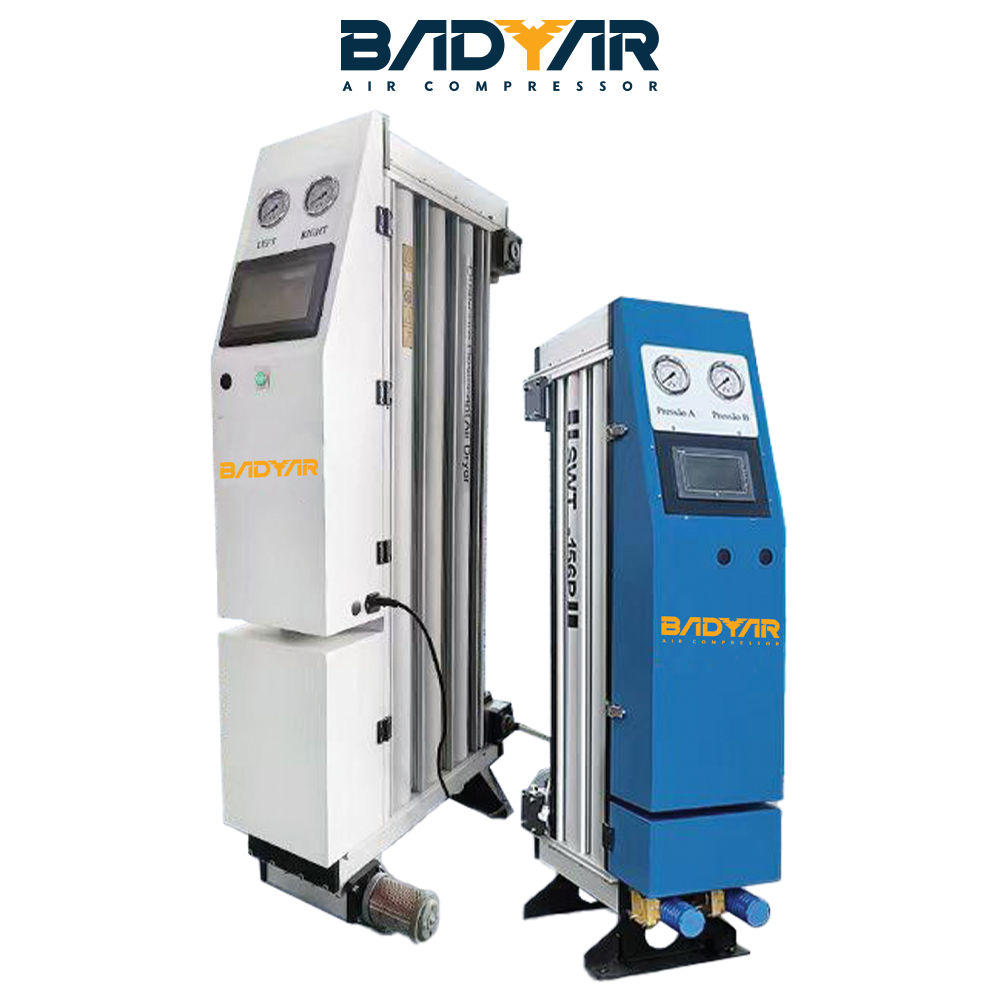
Elementless absorption dryer
Badyar heatless absorption dryers use advanced moisture absorption technology to remove water vapor from compressed air without the need for heat. This feature allows for precise humidity control and very low dew points, while saving energy and reducing operating costs.
What is the reason for using compressed air dryers?
Air is a colorless, odorless, and tasteless mixture of gases, mainly nitrogen and oxygen. This air naturally contains solid particulate pollutants such as dust, soot, and salt crystals, the amount of which varies depending on the environment and altitude.
The Challenge of Humidity in Compressed Air:
Water vapor is another natural component of air, the amount of which varies. The amount of humidity and air pollutants play a vital role in the compression process and the quality of the air leaving the compressor.
Problems caused by moisture:
The corrosive and destructive effects of water are well known
Uncompressed air at atmospheric pressure contains large amounts of water and contaminants such as (oil droplets, dust particles)
When air is compressed, the concentration of moisture and other contaminants increases
Consequences of not using a dryer:
If this corrosive mixture remains in the system, it will have destructive effects on pneumatic equipment, leading to unnecessary production stops, product spoilage, and reduced equipment life.
Application of compressed air dryers:
These devices are designed to remove moisture from the compression process, protect equipment and products, and provide clean and dry air.

Why should we use a compressed air dryer?
1. Operational safety and equipment protection
Uncompressed air can cause corrosion of pipelines, damage to the internal structure of the compressor. These problems will ultimately lead to system failure, repair costs, and production downtime. A compressed air dryer protects your system and keeps your operations safe and reliable.
2. Guaranteeing the quality of the final product
Moisture in the air can cause product spoilage, production defects, and increased production costs. Compressed air dryers provide clean, dry air and guarantee the quality of the final product.
3. International standards and assurance
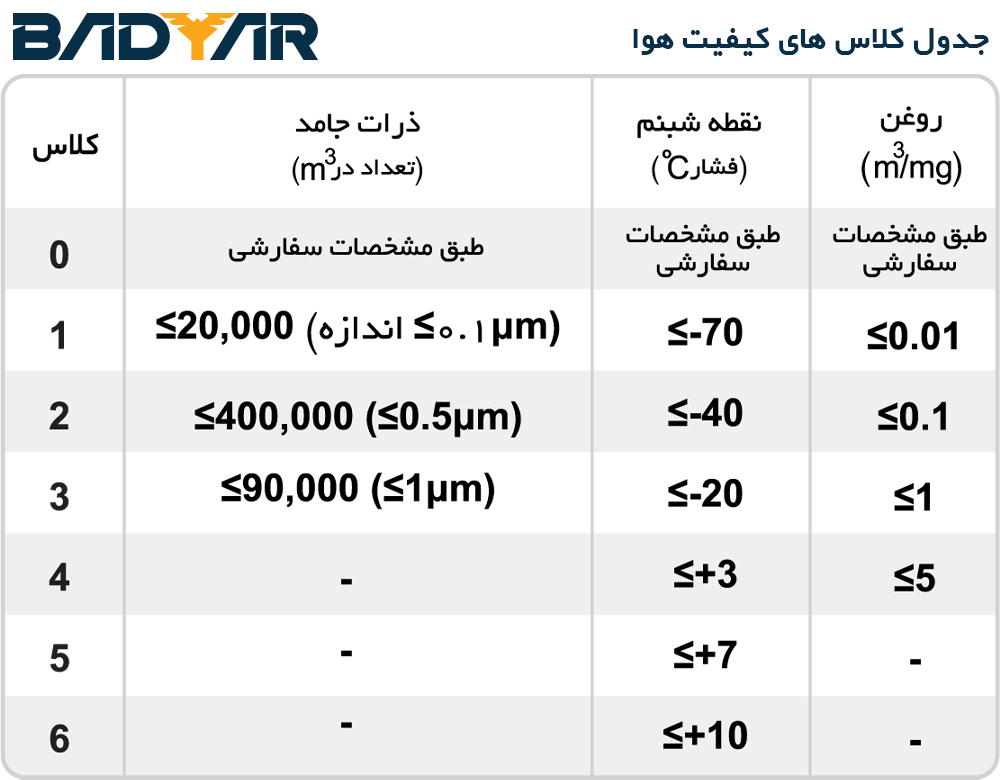
The ISO 8573-1:2010 standard defines six quality classes for compressed air. These standards can only be achieved by filtration, water separation, and drying.
Three key ISO standards:
- ISO 8573 (Compressed air quality)
- ISO 12500 (Filter testing)
- ISO 7183 (Compressed air dryers)
- Key benefits of compressed air dryers:
✔ Extend equipment life
✔ Reduce maintenance costs
✔ Prevent production downtime
✔ Ensure product quality
Compliance with international standards
Compressed air quality classes according to ISO 8573-1:2010 standard
The international standard ISO 8573-1:2010 categorizes compressed air quality based on three main parameters:
- Solid particles (Section 2.1)
- Humidity and dew point (Section 2.2)
- Oil (aerosol and vapor) (Section 2.3))
Applications for each class:
- Class 0: Sensitive industries such as pharmaceuticals, semiconductors and hospitals
- Class 1: Electronics industries and precision laboratories
- Class 2: Paint spraying and food industries
- Class 3: General pneumatic tools
- Class 4-6: General industrial applications